
This article was written in collaboration with The Traditional Catholic Weeb. For anime reviews and more, check out his WordPress blog here: https://traditionalcatholicweeb.wordpress.com/
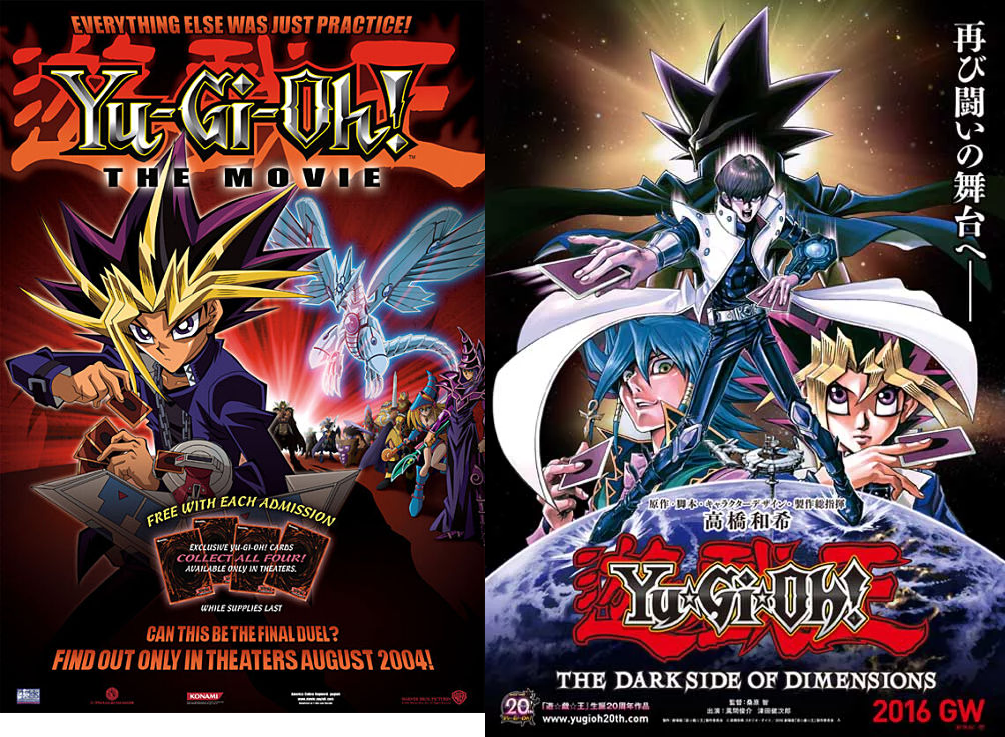
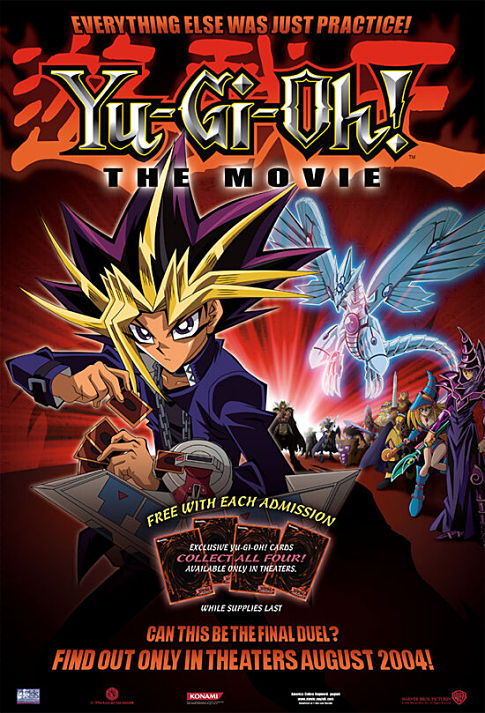
With the wild success that Yu-Gi-Oh! brought 4Kids, I suppose it would make sense that they would want to release a Yu-Gi-Oh! movie, even if Japan didn’t give them one to dub. In 2004, Yu-Gi-Oh! The Movie, also known as Yu-Gi-Oh! The Pyramid of Light, was released in U.S. theaters. Taking place between the Battle City Finals and Waking the Dragons arcs, the story mainly focuses on a duel between Yugi Muto and Seto Kaiba, in which Kaiba is attempting to find a way to defeat Yugi’s Egyptian God monsters. The movie was entirely scripted, animated, and voiced by 4Kids Entertainment. The movie would eventually also be dubbed in Japanese, released with the subtitle Hikari no Piramiddo. Generally, it’s an okay movie, but mostly feels like a quick cash grab. I mean, why would anyone make a movie to simply tell a good story?
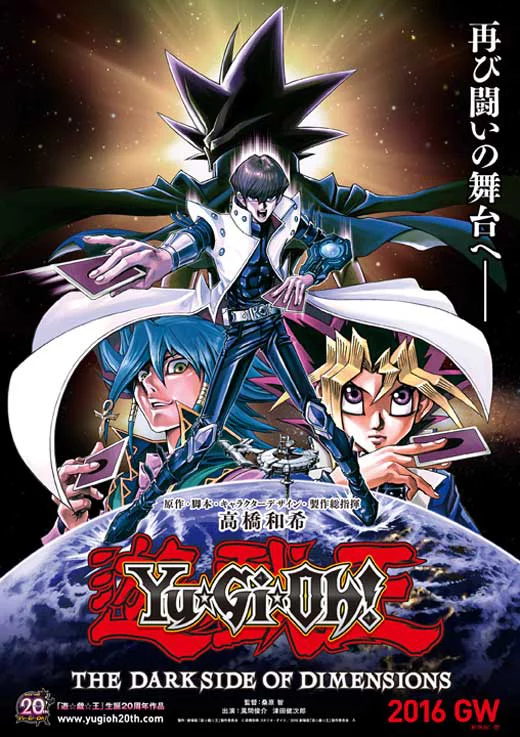
About a decade after the original series ended, Yu-Gi-Oh! creator Kazuki Takahashi returned to add one final installment to his celebratory masterpiece. Yu-Gi-Oh! The Dark Side of Dimensions was released in 2016 in Japan, and 2017 in America. The story takes place six months after the ending of the manga. Yugi Muto, having parted ways with his “other self” at the end the series, is now reflecting on his relationship with the Pharaoh, Atem. Meanwhile, Seto Kaiba is having mixed feelings about Atem’s departure and is hellbent on reassembling the Millennium Puzzle in order to bring back the Pharaoh and continue his eternal rivalry with him. The story, having previously concluded with the ceremonial battle between Yugi and Atem, adds one final epilogue and afterthought to the character’s experiences throughout the series.
With one Yu-Gi-Oh! movie being made in the West, and one Yu-Gi-Oh! movie being made in the East, it’s time to find out who did it best. The stage has been set for an epic East meets West showdown: Yu-Gi-Oh! Edition.
Eastern Competitor: Yu-Gi-Oh! The Dark Side of Dimensions
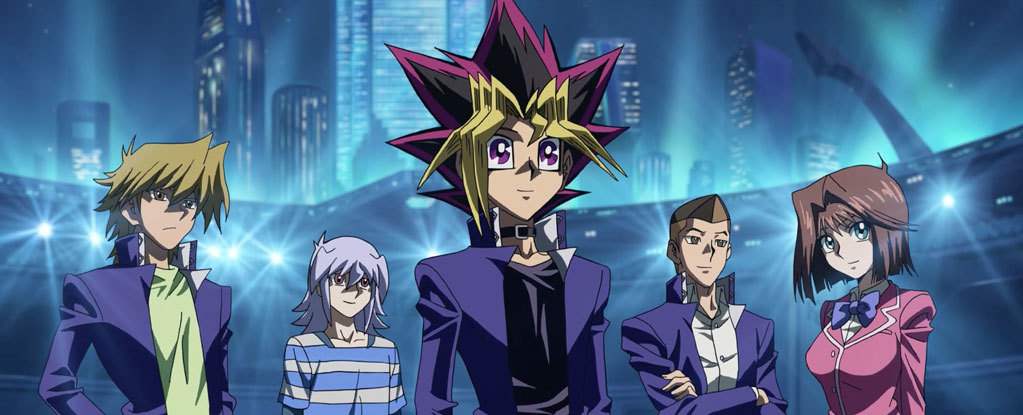
Yu-Gi-Oh: Dark Side of Dimensions was released 12 years after the original Duel Monsters story had ended, and was intended to be that arc’s last hurrah. Main characters Yugi, Joey, Téa, Tristan, and Bakura are on the verge of graduating high school, and are still latching onto the memories they made together – most of all, Yugi with his now-departed “other self”, Atem; the object of Seto Kaiba’s endless salt, as he hopes to meet him again for one last battle to settle their score by reassembling the pieces of the Millennium Puzzle, last seen in the series finale. He is interrupted by Diva, an Egyptian boy wielding a dimension-altering power who wants to rid Earth of any evildoers, to set up his own utopia with his disciples; to do this, he pretends to forge an alliance with Yugi, in the ulterior hopes of eliminating him from the picture. Thus begins a race by our protagonists to help Diva get back to his senses, and prevent his reign of darkness from manifesting.
Though not acclaimed as a masterpiece by any means, Yu-Gi-Oh! The Dark Side of Dimensions received better response from audiences and critics; I for one, enjoyed the moral values contained within, which were far different that what I was used to from the original series, as well as the darker tone of the villainous subplot.
Western Competitor: Yu-Gi-Oh! The Pyramid of Light
When you think about the infamous 4Kids Entertainment, it’s guaranteed you’ll have images of their horrendous anime edits as well as sound clips from their most infamous moments – “It’s time to duel!” from Yu-Gi-Oh! being one of the most iconic. But you’d never imagine that they’ll actually try to make their own anime…would you? Actually, THEY DID – twice! First with Yu-Gi-Oh: Capsule Monsters which was basically Yugi and friends playing a different type of board game, not to mention a forgettable premise (and game rules), and then this feature-length flick, Pyramid of Light. Set some time after the beloved Battle City arc, the movie features Seto Kaiba, still reeling with lots of salt over his defeat to Yugi, hoping to gain the three God Cards from him by use of a powerful card that can eliminate them from play. He challenges Yugi to a duel, unaware of the dark forces that reign within the mysterious card he has obtained in his possession, and it is up to the latter to dissuade him from pursuing his passions before destruction happens.
Yu-Gi-Oh: The Pyramid of Light came in theaters on 13 August 2004, and I vividly remember the promotional trailer for this advertising the reception of free Yu-Gi-Oh! cards, the eponymous one being among them, for buying a ticket to see it. Needless to say, the movie was a massive flop, with audiences and critics taking shots at everything from its writing to the animation. For 13 years, it remained Metacritic’s worst-rated animated movie, and Rotten Tomatoes lists it 2nd among the worst animated films of the decade. By and large, it’s widely considered a black stain to what’s otherwise one of the most influential gaming anime out there.
The Showdown
Aside from the fact that both flicks are part of the Yu-Gi-Oh! Duel Monsters world, both films do contain concepts that are shared among the two: be it in the realm of dueling, design or story – and it is these that we will endeavor to look into this post. Will the grand finale prove to prevail in those portions overall, or will nostalgia dictate the outcome of which Yu-Gi-Oh! film stands the test of time?
Visuals
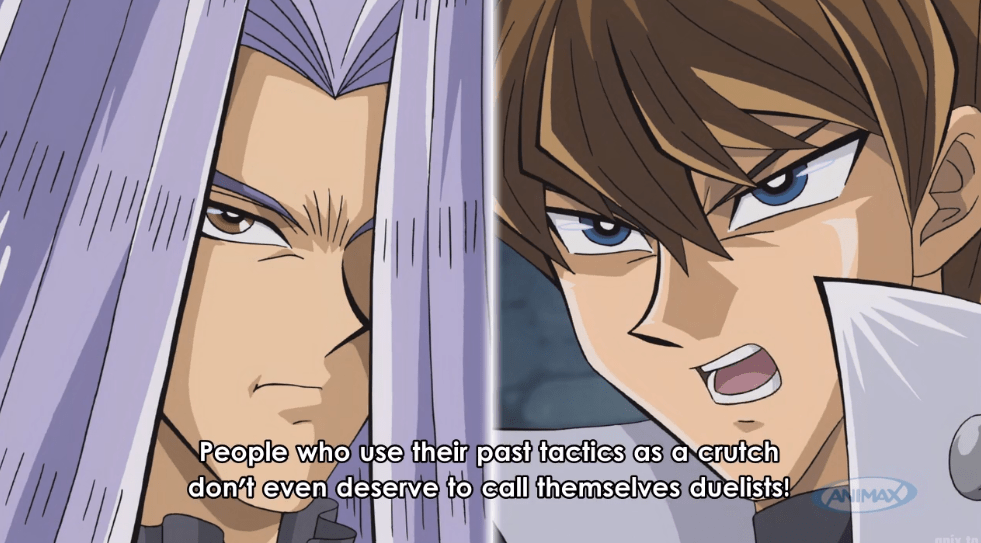
The quality of the animation from the two movies is very apparent. Pyramid of Light, which was animated by 4Kids, to its credit, manages to replicate, to a certain degree, those from the episodes and is generally very 2D-oriented and traditional-themed. There’s a lot of emphasis in separating the characters from the background, and this is done mainly by throwing the characters with a black outline around them. While not problematic in and of itself, the problem with how this movie handles it is that it’s way too blatantly obvious: unlike how the original series was able to make the characters distinct from the environment, and the balance between the shading and lighting were reflected on the characters. That being said, it is for the most part fluid and things like the monster attacks do still come off as splendid. The cards, like in Dark Side of Dimensions, go from showing the monsters and their battle properties to resembling their real-world counterparts, which is a first for the franchise, and helped to bridge the gap between the show and our reality.
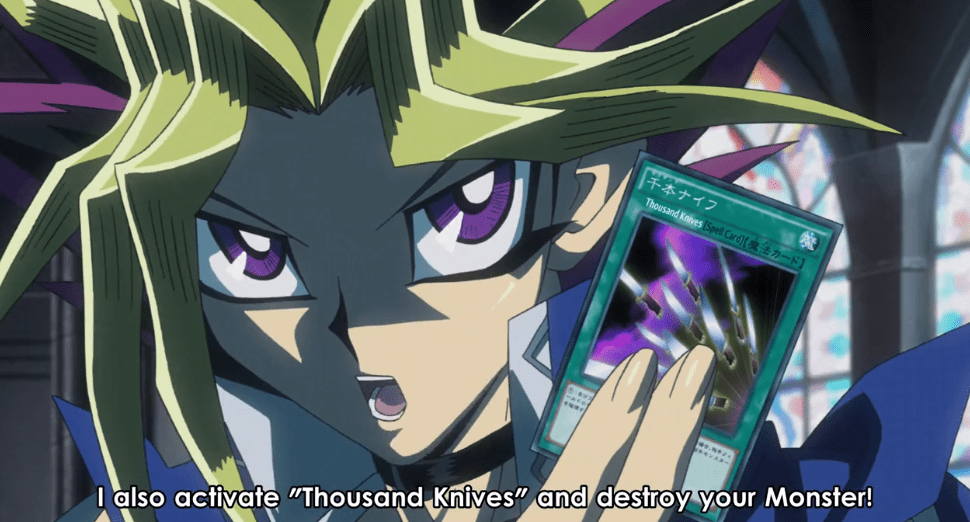
Dark Side of Dimensions’ visuals, on the other hand, were handled by Studio Gallop, who handled their parent series; here, the visuals have a more smoother feel to them and characters feel like they’re straddling between 2D and 3D. It has the feel of a mobile game: such as is apparent in the life points overlays, which went from the iconic number-in-a-box format reminiscent of 1990s sports telecasts to computer-generated ones that show the attack/defense, name, life points, and monster level or the cybernetic transitions when a card appears on the board. Additionally, some of the monsters are given a CGI treatment, like Aigami’s Cube monsters or Kaiba’s iconic Blue Eyes White Dragon variations. Now, personally, I’m not a fan of when CGI gets thrown into an anime background – more often than not, it’s distracting and doesn’t blend well together – and unfortunately Dark Side of Dimensions is no exception to that.
All things considered, while the visuals of Pyramid of Light will always evoke a sense of nostalgia and are standard for Yu-Gi-Oh! as a whole, I think Dark Side of Dimensions, despite some of their eccentricities, wins out this round for how modern and crisp it looks and plays out.
Dark Side of Dimensions 1-0 Pyramid of Light
Music
4Kids has done a lot of controversial things over the years, but one thing they have absolutely excelled at is their music. Aside from creating the greatest theme song ever (the Pokémon theme song), 4Kids composed a number of iconic pieces for the English dub of Yu-Gi-Oh! Duel Monsters including the Yu-Gi-Oh! Main Theme, Kaiba’s Theme, and the Friendship song (not sure if those are the exact titles). The songs are usually techno in style and are quite energetic, although they can get kind of cheesy (It’s time to D-D-D-D-DDDD-Duel!).
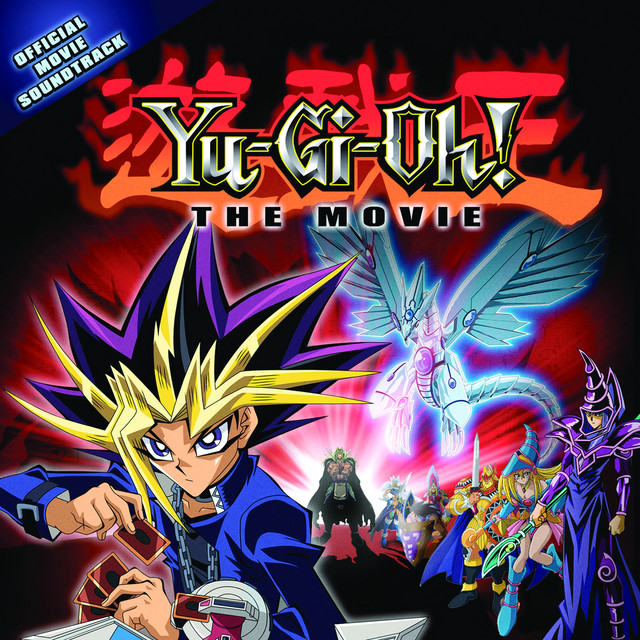
The music used by 4Kids in The Pyramid of Light mostly comes from the main TV show without much deviation. Along with the release of the movie, 4Kids released the album titled Yu-Gi-Oh! The Movie Soundtrack. This would be the second Yu-Gi-Oh! album 4Kids would release, with the other being Music to Duel By. Director, Eric Stuart, admits that the album was made to rake in licensing fees when they distribute the film to foreign countries. The only song that is featured in the movie is “You’re Not Me,” an anti-hero son written to portray the character of Seto Kaiba. It plays as Kaiba flies his Blue-Eyes jet to meet with Pegasus. Some of the other songs appear in the end credits, including “One Card Short”, “Step Up”, and “How Much Longer”. These songs are, again, somewhat catchy and somewhat cheesy. They definitely give off that late 90’s/early 2000’s vibe.
The music that plays during the Pyramid of Light or Dark Side of Dimensions depends on whether you are watching the subbed or dubbed versions. The Pyramid of Light is one of the rare examples of a Yu-Gi-Oh! production that was made in America and was dubbed in Japan. The Japanese version of The Pyramid of Light plays the same music used in the series, with an original song that plays in the end credits. For the Dark Side of Dimensions, which was originally produced in Japan, features much of the same music from the series, including some remastered versions, and some original pieces. The end credits feature the song, “To Believe in Something,” a cold and chilling song that reflects the relationship between Yugi and Atem.
The English dub of The Dark Side of Dimensions also uses much of the same music that was used in the English dub of the Yu-Gi-Oh! series, with remastered versions and original pieces. The dub even includes instrumental versions of songs released in “Music to Duel By” and the movie soundtrack including “I’m Back”, “One Card Short”, and “We’ll Be There”. The end credits features an epic remastering of the full-length Yu-Gi-Oh! Theme Song, it even removed the cheesy “D-D-D-D-DDDD-DUEL”. If you haven’t heard it, you should go listen to it.
Comparing the music between The Pyramid of Light and The Dark Side of Dimensions, including both English and Japanese versions, is a bit more difficult than I thought it would be. I wouldn’t say that the music in either movie is bad, but The Dark Side of Dimensions does feature a lot more remastered music that adds an extra vibe, and the music that plays in the English dub when the Pharaoh returns is absolutely stunning. After careful consideration, I would have to give this point to The Dark Side of Dimensions as well.
Dark Side of Dimensions 2-0 Pyramid of Light
Millennium Item Replicas
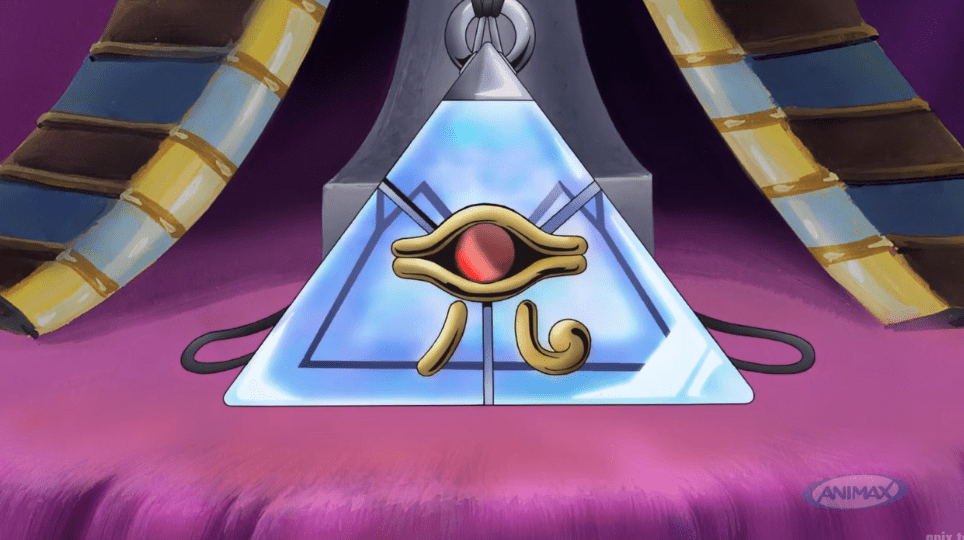
Two objects of similar mystical power are put into play during Pyramid of Light and Dark Side of Dimensions’ playthrough. In the first is the eponymous object which acts as a foil to Yugi’s Millennium Puzzle: a light-blue pyramid which stores the soul of the main villain, Anubis, that is first encountered in Domino City’s museum. It’s power is twofold: firstly, it acts as a prison for those who are unfortunate enough to pass through it – Joey, Tristan, and Yugi prime – sending their souls to a labyrinthical room filled with winding stairs, many rooms that lead to nowhere, and worst of all, a horde of Anubis’ undead servants which they must fight off. Attached to its use is a prophecy, which says “When the King of Light and the King of Darkness fight, thus shall the King of Destruction be reborn.” Upon Kaiba’s use of the eponymous card, it becomes a silo for said villain to establish a Shadow Game that drains participants’ energy, effectively making it into a silo to bring his human form back and take back his dominion. Upon Yugi’s defeat of Anubis in the duel, the pyramid is destroyed, never to be reformed again, and the souls of Yugi prime, Joey, Tristan, and Téa are taken back to land.
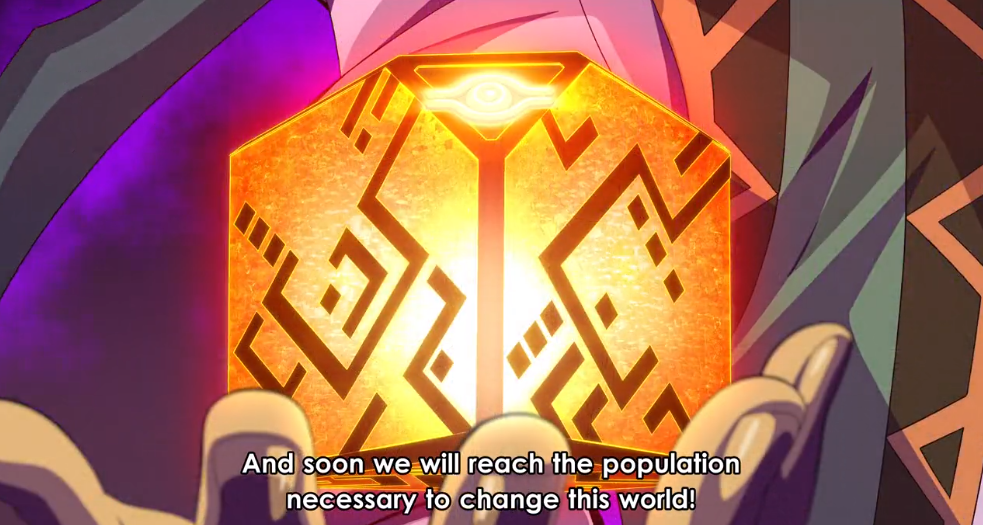
Whereas the Pyramid of Light is a simple tool, we have Aigami’s Quantum Cube, which is the eighth and hidden Millennium Item. It shares the former’s ability to send victims to another dimension, although this time, its choices are more diverse in that it uses its victims’ memories to build a world that suits their senses – and the effects much deadlier. Not only are victims dragged into the device, but they also gradually disintegrate into small pieces. Apparently, it’s also capable of absorbing the power of different Millennium Items, and Kaiba uses it in the end to travel back in the past to duel his biggest rival, the result of which is never released. So basically, this makes its user like Thanos with the Infinity Gauntlet, except the rules are more vague and unstable, as evidenced with how Aigami seems to make up its use at every turning point. I wonder what happens if you collect all the Millennium Items and bond them together, does it make a giant spaceship?
Personally, I liked the Pyramid of Light more. Aesthetically, I liked how it inverts with the Millennium Puzzle and the confusing layout of its inner sanctum reminds me about Egyptian pyramid layouts, and how mysterious they can be. As someone who was into Egyptian art and architecture in my youth, I like that the show stuck to this theme this way, even if its broader execution was done badly. I look upon this object, and see a semblance to it being a true Millennium Item – unlike the Quantum Cube. Speaking of which, said object just feels shallow and hard to follow with – I remember even watching the movie the first time confused as to what its purpose was; not to mention, its origins and purpose was poorly architected. Just because you have something of great power doesn’t make it better, but you know what does? Being able to lay out all the details of it, so that we, the audience, can have an appreciation for them just as we did with the Millennium Rod/Ring/Puzzle and the other bits.
Pyramid of Light 1-2 Dark Side of Dimensions
Dueling Mechanics
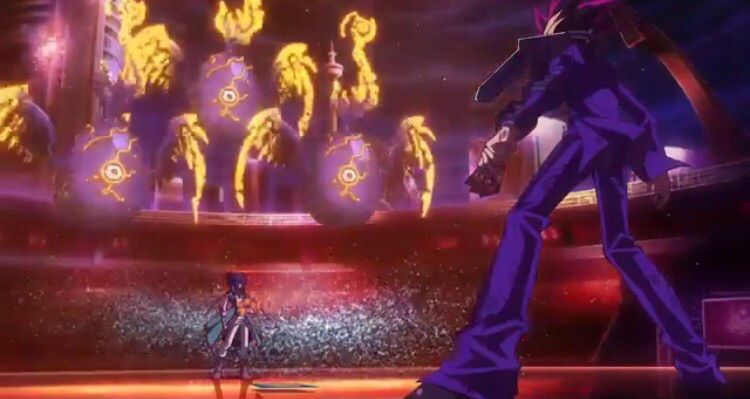
The Dark Side of Dimensions introduces us to a new kind of dueling called Dimension Dueling. Dimension Duels are always initiated by the movie’s main villain, Aigami (or Diva). In a Dimension Duel, high level monsters do not require tributes to be summoned. Instead, players summon monsters by infusing their spirit energy to try and raise their monster’s attack points as high as they can, without exceeding the monster’s original attack strength. Additionally, when monsters are destroyed, players don’t take battle damage; they instead lose life points equal to their monster’s attack points. Duelists in the movie seem to max out their monster’s attack strength every time, but perhaps there could be situations where it would be more strategic to keep attack points lower and not risk losing too many life points.
The movie also introduces a new archetype of cards called Cubics. These are also used by Aigami/Diva. The archetype features Vijan, the Cubic Seed – a monster with 0 attack points that causes any monster who destroys it to lose its ability to attack and activate its effects. Aigami uses Vijan to help him summon more powerful Cubic monsters such as Cubic Beasts, Cubic Behemoths, Cubic Kings, Cubic Emperors, and Cubic Lords.
Yugi and Kaiba continue to duel with their classic Dark Magician and Blue Eyes White Dragon decks, but each duelist also adds a few upgrades to their roster. Most of these upgrades will be mentioned later in the Yugi/Kaiba duel section. One upgrade to Kaiba’s deck that was shown early in the movie is Neo Blue Eyes White Dragon, which actually has the ability to attack three times in the real-life card game. Another monster used by Kaiba is Blue Eyes Alternative White Dragon, which has the power of monster destruction. This movie also features the return of Obelisk the Tormentor, although Kaiba has to draw this card out of the ground in order to summon it. (Is that even legal?)
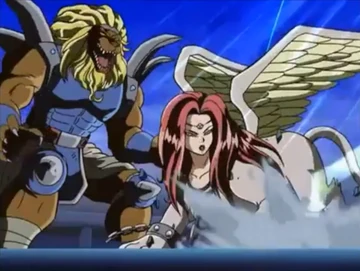
The Pyramid of Light doesn’t introduce any new mechanics to the gameplay, but it still introduces a few new cards. The Pyramid of Light trap card doesn’t have the same effect that it does in the movie. In the real card game, it just helps you summon Andro Sphinx and Sphinx Teleia without tributes. Andro Sphinx and Sphinx Teleia are both fairly powerful monsters, having roughly 3000 attack and defense points and the ability to inflict damage when they destroy a defense position monster. Since these seem to be stand-alone cards and not incorporated into an archetype, I don’t believe they have seen much play in the meta. On the other hand, Blue Eyes Shining Dragon and Sorcerer of Chaos see fairly regular play in modern Blue Eyes and Dark Magician decks, respectively, as Blue Eyes and Dark Magician decks seem to hold their own in the meta.
The Pyramid of Light introduced a few cool cards into the game, but the Dark Side of Dimensions introduced us to a bunch of monsters that changed the game in both the movie and the real world. Aigami’s Cubic archetype, Kaiba’s Blue Eyes upgrades, and Yugi’s Magician Girl monsters are all powerful cards that are frequently used in the current competitive meta. I don’t think the mechanics of Dimension Dueling are going to see much light outside of DSOD, but it is still an interesting concept, nonetheless.
The winner of this section is, hands down, The Dark Side of Dimensions.
Dark Side of Dimensions 3-1 Pyramid of Light
Supporting Characters
By and large, the role of Yugi’s friends are practically the same both films. When Yugi’s not dueling, they can be seen flanking him during their conversations, and perhaps providing support to our main hero during that time. That doesn’t stop them from getting involved in the action, however. In Dark Side of Dimensions, Joey and Bakura (the only of the bunch who isn’t in Pyramid of Light) take this on, each having their own encounter with Aigami’s powers. The stakes are high for both of them: Joey is trapped in his cube and must find a way out before the device obliterates him to gold dust, while Bakura is confronted by said villain over the death of Shadi, as shown in a flashback – to which he shows genuine sorrow for, leading Aigami to hesitate at killing him. Téa and Tristan basically do absolutely nothing of note in this film; but it is Aigami’s companions that steal the spotlight for the supporting characters here.
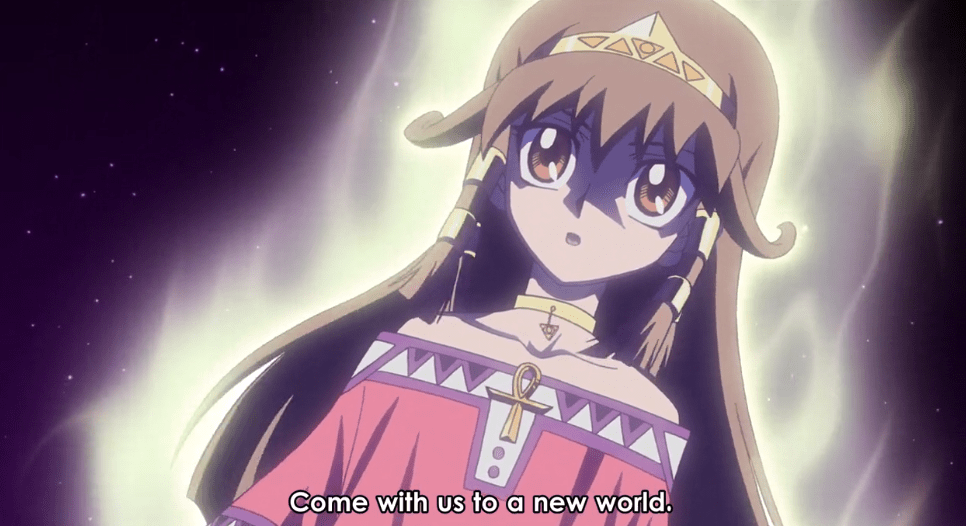
Those folks make up a collective known as Prana, a group of children who possess reality-bending powers with whom he wishes to create a utopia with. Among them are Mani, his best friend, and his sister Sara, who despite her love for her brother, joins forces with Yugi to stop the plan. One thing I liked about them, apart from their backstory is that the movie shows from time to time the oxymoron of their hopes and dreams: in trying to eliminate evil, that desire consumed them, and made them unworthy of possessing such a power; Mani, for example, suffers this demise when possessing the Millennium Ring that Bakura wields, and attempts to execute judgment on him – even though Aigami pleads with him not to.
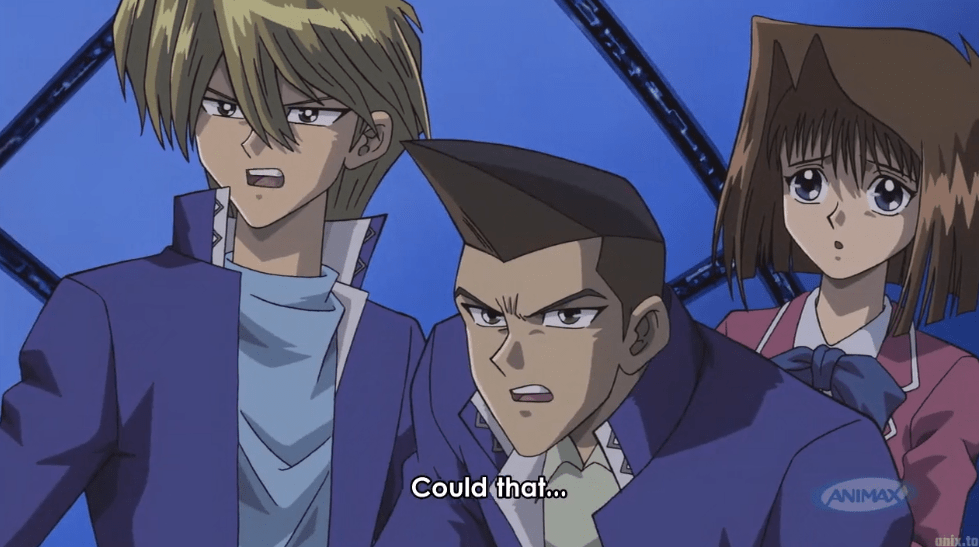
Granted, it’s a very stark contrast to that which is exhibited by Joey, Tristan, Téa, Mokuba, and Pegasus in Pyramid of Light. While there, their actions possess no added moral value, that still doesn’t stop it from being, in my opinion, more entertaining. Joey, Tristan, and Téa band together to fight their way through evil mummies in Anubis’ tomb, which add an extra action element, and some bits of humor in the midst of pivotal, death-defying duel, not to mention heartwarming when the three with Yugi affirm their friendship; something that Dark Side of Dimensions also has, but is more symbolic and for show than practical. Pegasus’ appearance at the beginning, and his duel with Kaiba, was surprising but also satisfying to watch the latter get his comeuppance against the man who was in the first season had captured his soul.
Mani and Sera, on the other hand, never really managed to capture the level of character quality as opposed to the side characters; who, by the way, themselves, save for the exception of Bakura, were treated better in Pyramid of Light as Yugi’s co-companions and not just, well, cardboard cutouts of their episodic counterparts. So that’s one thing that 4Kids got right at least.
Pyramid of Light 2-3 Dark Side of Dimensions
Villains
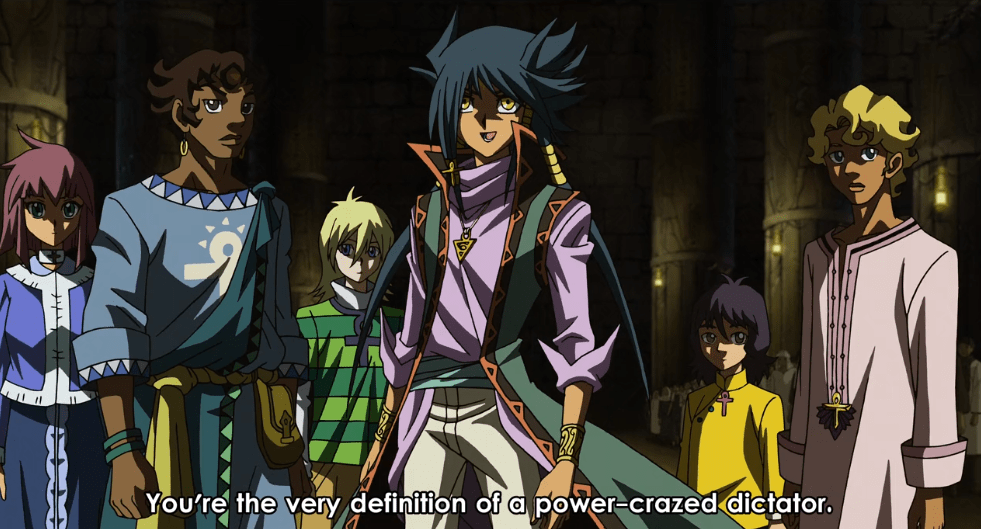
Diva/Aigami from Dark Side of Dimensions easily wins this section, and it’s not even a close battle Let’s see what he’s composed of. Tragic backstory? Check. Supernatural powers, the origin of which is clarified? Check. Good dueling strategy? Check. And finally, we have another check for someone with a personality, and acts as a bit of a parallel and foil to Yugi; in that both are confident, loyal to family, have Egyptian ties, are powerful Duel Monsters players, though all the while Diva/Aigami is vengeful at his master Shadi’s death, and as a result, drunk with pride and contempt for the world, something that Yugi does not obviously have. His interaction with his Quantum Cube gives him a backdrop of mystery that fits his character and intentions so well, not to mention the franchise as a whole.
Now getting back to Anubis…what went wrong with him? Literally everything. As a standalone villain, he sucks. The only defining thing he has is a pair of sphinx monsters that don’t even last 10 minutes in the movie, if not being intimidatingly evil. His reason for existence – surprise surprise, to take over the world and rule it with his monster disciples – is so uninspired and poorly built. Yeah – he just shows up then and there just to say “ooooh, I’m scary and evil, hahahaha”. In the context of Yugioh…he sucks. This is a villain who wakes up from his 4000-year slumber thanks to Yugi solving the Millennium Puzzle in the first episode, but somehow waits years before unleashing his evil plan. What was he even doing at that time? Was he just chilling in some library catching up on all of world history since his death? Regardless of the reason, it’s unjustifiable and adds nothing to the overall story of world building.
Yu-Gi-Oh: Duel Monsters is a series that has brought up many great villains – not just Diva/Aigami, but also Pegasus, Noah Kaiba, Rafael for example – but Anubis’ inclusion among them is a stain in that list. How anyone could have thought him up baffles me.
Dark Side of Dimensions 4-2 Pyramid of Light
Yugi/Kaiba Battle
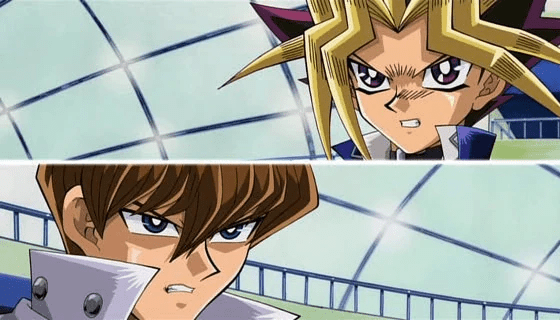
The Pyramid of Light mainly revolves around the duel between Yugi and Kaiba. The world champion of Duel Monsters previously paid a visit to the creator of said game, Maximillion Pegasus, in an attempt to acquire a card that can defeat Yugi’s Egyptian God monsters. After defeating Pegasus in a duel, Kaiba notices there are two cards that can defeat the Egyptian gods, even though Pegasus swears there was only one. Kaiba summons Yugi to his observatory, where he forces Yugi into a duel in which he will finally prove that he is capable of defeating the Egyptian Gods.
Yugi uses his typical strategy of summoning Kings Knight, Queens Knight, and Jacks Knight; and sacrificing the three of them to summon Slifer the Sky Dragon. Kaiba then plays a spell card called Obligatory Summon, which forces Yugi to summon his other two Egyptian gods – Obelisk the Tormentor and The Winged Dragon of Ra. Next, Kaiba activates one of the cards he got from Pegasus – a trap card eponymously named The Pyramid of Light. The text of this card reads, “All God cards on the field are removed from play.” Consequently, all of Yugi’s Egyptian gods get banished. After Kaiba activates The Pyramid of Light trap card, a massive replica of the artifact known as The Pyramid of Light appears around Yugi and Kaiba, preventing anyone else from viewing or interfering with the Duel.
Yugi continues to summon his classic monsters such as Dark Magician and Dark Magician Girl. He even summons a new monster called the Sorcerer of Dark Magic which has the power to negate trap effects. Kaiba also whips out his iconic monsters such as the Blue Eyes White Dragon and Peten the Dark Clown in addition to using his classic trap cards such as Deck Destruction Virus. He also uses another monster he got from Pegasus called Blue-Eyes Shining Dragon which gains 300 attack points for every dragon monster in the graveyard.
In the beginning of the movie, it was revealed that Anubis created the Pyramid of Light card and snuck it in with Pegasus’ Blue Eyes Shining Dragon. Hence why Pegasus was confused when Kaiba said he had two cards that could defeat the Egyptian gods. At the end of the duel, the power of the Pyramid of Light card becomes too much for Kaiba to handle, and he ends up getting taken over by Anubis. The Egyptian god of the dead emerges from a puddle and literally tosses Kaiba aside, replacing him in the duel. Yugi must now fight Anubis and stop him from taking over the world. Earlier in the duel, Kaiba had taunted that he plans on using Yugi’s Egyptian gods against him, and now Yugi thinks he has finally figured out what Kaiba meant. Yugi pulls Kaiba’s facedown card into his hand and activates it. The card is Return from the Different Dimension, which allows Yugi to bring his Egyptian gods back to the field, successfully defeating Anubis in the process.
Overall, I would say this duel does a good job at capturing the classic rivalry between Yugi and Kaiba.
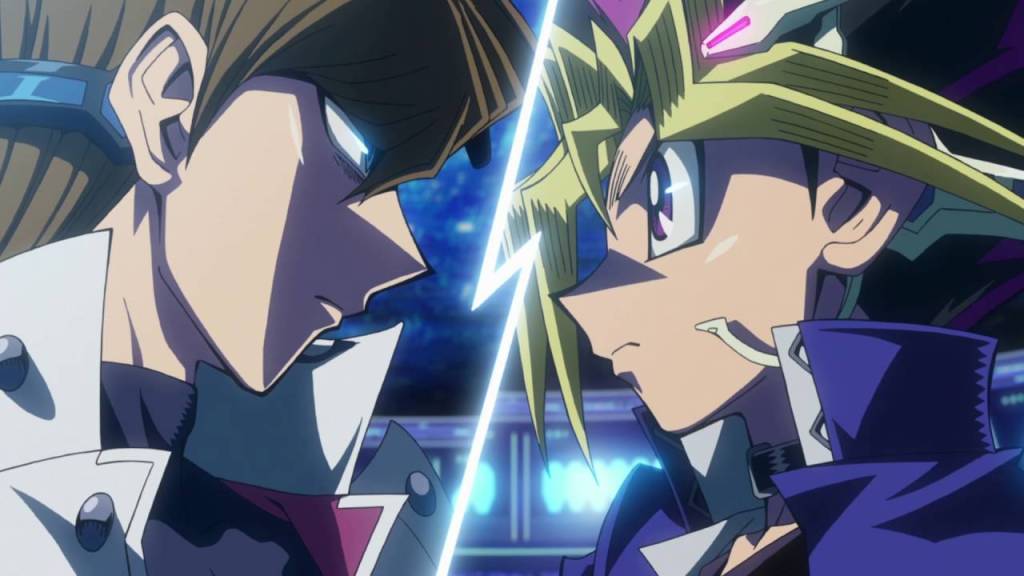
The Dark Side of Dimensions also features a duel between Yugi and Kaiba, although this duel is not the main focus of the movie. Kaiba’s main motivation throughout the whole movie has been to unearth the Millennium Puzzle and resurrect the Pharaoh, Atem, so he can continue his eternal rivalry with him. Before the duel begins, Kaiba orders Yugi to complete the puzzle and bring the Pharaoh back into his body. Yugi, who has fully accepted that Atem is gone forever, tries to convince that it won’t work. Now that Yugi has separated from the Pharaoh, he is determined to prove that he can defeat Kaiba on his own, and Kaiba is trying to prove that Yugi is still the weakling he has always been and is still no match for him.
Both duelists whip out their classic monsters, with both duelists also adding upgrades to their decks as well. Yugi summons his new magician girl monsters, Apple Magician Girl and Lemon Magician Girl, who help him summon the classic Dark Magician Girl. Kaiba uses his new monsters such as Assault Wyvern, Blue Eyes Chaos Max Dragon, and Deep Eyes White Dragon. The duel ends with Yugi playing a trap card called Final Geas. This card banishes every monster in both players’ graveyards, but allows Yugi to summon one of them to the field. Yugi summons his Dark Magician, which had previously been destroyed. Kaiba only has 2500 life points left, but the observant viewer will notice that he has 1 face-down card. Yugi declares a direct attack. Kaiba’s life points start falling, but as soon as they reach 100, the duel crashes and Cubic Aigami emerges. Thus, the duel ends inconclusive, leaving us to wonder who truly won that duel.
While the Pyramid of Light may have entirely featured a duel between Yugi and Kaiba, the motivations between the two characters seem to be pretty one-note, as they are simply just trying to beat each other’s monsters. The Yugi and Kaiba duel in The Dark Side of Dimensions has more heart and soul to it, as the characters are trying to prove their worth to each other. They also bust out powerful upgrades to their classic monsters, which make the duel more exciting and thrilling. After careful consideration, I think I will give this point to the Dark Side of Dimensions – and with that, seal up their victory as the better production!
Final Tally: Dark Side of Dimensions 5-2 Pyramid of Light
Conclusion
No surprises here – Dark Side of Dimensions, Kazuki Takahashi’s final piece of Yu-Gi-Oh: Duel Monsters related media, manages to outshine its theatrical predecessor in more ways that one. One way it does is that, unlike Pyramid of Light, it purveyed a greater sense of narrative depth in its battles, which was a much-needed upgrade to its traditional, one-way format of duel-and-switch opponents by being more action-packed in its mechanics, but also sentimental, since this is also Yugi and Kaiba’s final on-screen battle, one that’s also rife with a touching message to the audience that though it may have been many years since this anime aired, to go forward and let its legacy live on within you; which is a great message to boot.
Had 4Kids still been around and given control of making his film, I guarantee you sadly that they would not have had the creative capability as Studio Gallop did in making this wonderful finale; probably it would have been another meager attempt to show how “friendship is magic” or some corny thing like that. I guess perhaps it’s best to let the people who know Yu-Gi-Oh, and by extension how to make an intense atmosphere for storytelling handle the work; kudos to Studio Gallop for re-igniting the sense of wonder in producing Dark Side of Dimensions. And many thanks to the late Kazuki Takahashi for all the time, passion and hard work he put into putting together this show for us.
For more East meets West articles, check out these posts from The Traditional Catholic Weeb:
 Anime on the Mind